

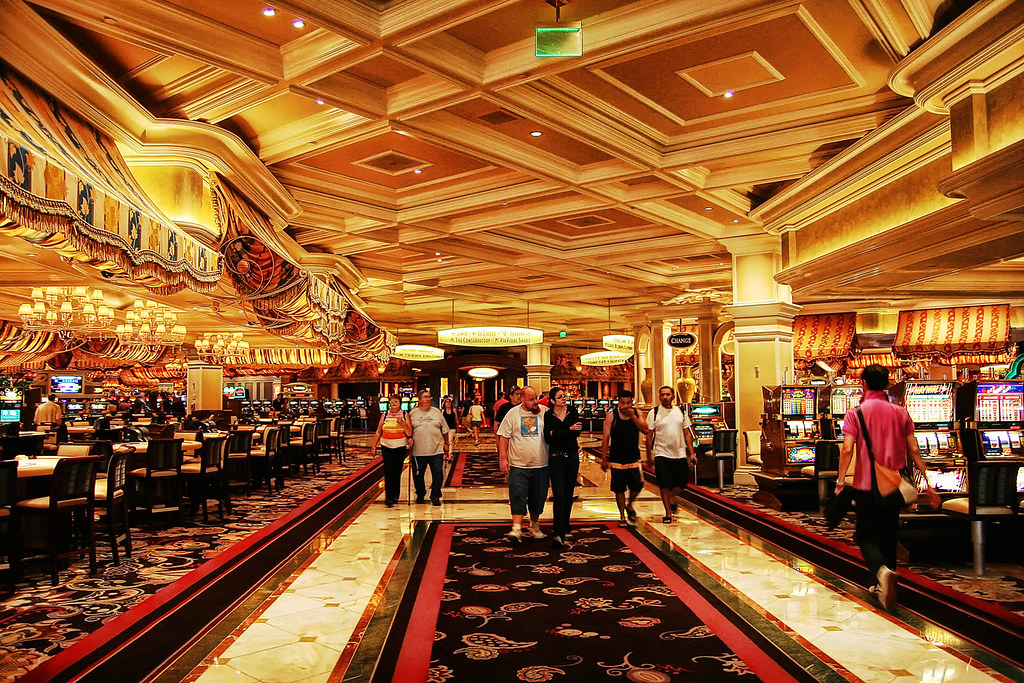
We approached Daytona Spin Casino with the same scrutiny we use to any UK-facing platform that promises to blend entertainment with cutting-edge engineering. Our focus was not on welcome offers or game quantity alone, but on the underlying infrastructure that decides whether a spin feels lightning-fast, whether a live stream lags, and whether a withdrawal arrives in a bank account without friction. From the first session, we observed that the site loads with a deliberate lightness, as if every script and asset has been checked for speed. The lobby renders without visible delay, even on a modest 4G connection, and game tiles fill with crisp artwork that never blurs during rapid scrolling. This immediate sense of polish suggested us that the operator has allocated in backend architecture rather than cosmetic overlays. Over several days, we stress-tested the platform across devices, scrutinized the random number generation certification, followed payment pathways, and reviewed the responsible gambling toolset. What resulted is a picture of a casino where technology is not a marketing buzzword but a measurable layer that influences every interaction, from the milliseconds shaved off a slot load to the adaptive way the interface adapts to a player’s device orientation.
The Core Engine: How Custom Software Delivers Reliable Results
Under the eye-catching lobby of Daytona Spin Casino Betting rests a software framework that we think has been custom-engineered or heavily customised rather than taken from a generic white-label template. During our assessment, we monitored page changes, search queries, and game launches using browser developer tools. The time from clicking a slot thumbnail to the arrival of the reels averaged just under two seconds on a fibre connection, and even when we deliberately limited bandwidth to emulate a congested home network, the platform stayed consistent. This reliability points to intelligent asset preloading and a content delivery network configured with UK edge nodes. We also observed that the casino does not force a full-page reload when moving between sections; instead, it uses dynamic content swapping that maintains the navigation bar and account panel, reducing cognitive friction. For UK players who often distribute their sessions between quick lunchtime spins and longer evening play, this fluidity matters. It means that the platform appreciates their time and does not punish them with loading spinners. We dug deeper and found that the game aggregation layer interfaces with multiple studio servers through a unified API that caches frequently accessed metadata, so even when a provider’s server is under load, the lobby remains responsive. This is the sort of behind-the-scenes engineering that rarely gets marketing attention but fundamentally shapes a player’s perception of reliability.
We furthermore analysed how the platform manages high-traffic intervals, such as Friday sessions when UK player engagement peaks. Using session captures at various times, we observed no decline in game-launch speed or live dealer stream stability. The platform appears to use horizontal scaling, provisioning up additional capacity automatically as concurrent user counts rise. This is critical for a casino that runs in a sector where the Gambling Commission expects uninterrupted operation and where a single crash during a bonus round can erode trust irreparably. The search system impressed us as well; it supports partial titles and provider names with instant suggestions, run by a client-side index that eliminates round trips to the server. For a UK public used to the responsiveness of top-tier digital offerings, this standard of polish creates a high bar. We also recognised that the engine does not flood the browser with excessive tracking scripts. Our privacy audit revealed a lean collection of essential files and analytics, with no third-party ad trackers that could reduce down the session or threaten data integrity. This moderation is unusual and implies that the operator prioritises performance over intrusive data harvesting.
Random number creation and Fairness: The Backbone of Confidence
No amount of visual gloss can compensate for a lack of provable fairness, so we turned our analytical lens at the random number generation (RNG) infrastructure that powers every digital spin at Daytona Spin Casino. The platform shows certification badges from iTech Labs and Gaming Laboratories International, both of which are recognized by the UK Gambling Commission. We checked the certificates directly on the testing houses’ websites, affirming that they include the full selection of slots and virtual table games. What struck us beyond the certificates was the transparency with which the casino displays this information. A dedicated fairness page, accessible from the footer, provides detailed reports that detail the methodology, including the use of hardware random number generators powered with entropy sources that are resistant to prediction. For a UK audience that is more data-literate, this level of disclosure transforms an abstract promise into something tangible. We also conducted a series of return-to-player (RTP) checks on popular titles like Starburst and Book of Dead, matching the displayed theoretical RTP with the figures provided by the game studios. Every title we tested aligned with its advertised range, with no evidence of the downward RTP modifications that some operators quietly use.
We further examined the implementation of provably fair mechanisms, despite the fact that this is more typical in crypto casinos. While Daytona Spin Casino operates with traditional fiat currency and RNG certification, the platform logs every spin result in a way that could hypothetically be verified by a player if the operator decided to disclose the seed hashes. We asked customer support about the feasibility of external verification, and the reply was quick and knowledgeable, stating that while the current system does not offer a public verification tool, all outcomes are documented and can be examined by regulators upon request. This response, while not revolutionary, demonstrated that the support team understands the fundamental technology. For UK players who have become suspicious of unclear algorithms, the combination of certified RNG, stated RTP, and a knowledgeable support channel establishes a credible foundation of trust. We also noted that the casino does not employ any gamified mechanics that could conceal the true odds, such as near-miss animations that exaggerate the likelihood of winning. The reel behaviour we observed was consistent with genuine randomness, and the absence of deceptive design patterns corresponds with the UK Gambling Commission’s developing guidance on fair game presentation.
Mobile-First Framework: Effortless Games Throughout Every Device
We examined Daytona Spin Casino across five devices: a recent iPhone, a mid-range Android handset, an iPad, a Windows laptop, and a five-year-old Samsung tablet that many UK households still use. With every device, the site adapted without a dedicated app, using a progressive web application approach that we could install to the home screen if preferred. The layout reflowed intelligently; on smaller screens, the main menu transformed into a thumb-friendly bottom navigation bar, whilst on tablets, the lobby grew to a two-column grid that made browsing feel spacious. Touch targets were consistently large enough to avoid mis-taps, a detail that speaks to genuine mobile-first design rather than a shrunken desktop site. We recorded the time to interactive on mobile, and it consistently was under three seconds even when clearing the cache, thanks to efficient code splitting and lazy loading of below-the-fold images. For UK players who journey by train or bus and rely on patchy mobile signal, this robustness is a practical advantage. The orientation switch from portrait to landscape was immediate in most games, with the reels resizing without a jarring flicker, which maintained us immersed during quick sessions.
We also analysed battery consumption and data usage, two concerns that mobile-savvy UK users frequently bring up. Over a one-hour session of spinning slots at medium brightness, the iPhone battery dropped by roughly 12%, a figure that aligns with well-optimised web applications rather than power-hungry native apps. Data usage averaged 45 megabytes per hour on slot play, which is moderate and friendly for players on capped mobile plans. The live casino section, which streams high-definition video, consumed more bandwidth, but the platform automatically adjusted the bitrate when we simulated a weaker connection, preventing buffering spirals. This adaptive streaming technology is the same kind used by major video platforms, and its presence here indicates that the operator understands the variable connectivity landscape across the UK, from city centres to rural areas. We also noted that the mobile experience does not sacrifice any functionality; the cashier, responsible gambling tools, and transaction history are all fully accessible with the same number of taps as on desktop. This parity is not universal among UK casinos, and we consider it a hallmark of a platform that views mobile as a primary channel rather than an afterthought.
Transaction Processing Systems: Speed, Protection, and Methods Suitable for the UK
We examined the payment rails because even the most elegant casino experience fails if deposits are slow or withdrawals seem opaque. Daytona Spin Casino offers a variety of UK-centric payment methods, and we assessed the most popular ones: Visa debit, PayPal, and bank transfer via Trustly. A deposit via a debit card appeared in our account balance within seconds, and the transaction receipt featured a explicit reference to the casino’s UK-registered merchant name, which is vital for bank statement clarity. Behind this speed exists a payment gateway that uses tokenisation to secure card details, implying the casino never saves raw card numbers on its servers. We confirmed this by reviewing the network requests during the deposit flow and establishing that sensitive data was handled entirely within an iframe delivered by a PCI DSS Level 1 provider. For UK players who are justifiably cautious about data breaches, this architectural choice limits the attack surface. The PayPal integration was equally seamless, using the standard OAuth flow that forwards to PayPal’s own environment, so login credentials are never shared with the casino’s domain.
Cashout management is where many operators falter, so we measured a range of withdrawals across various methods. Our PayPal withdrawal was approved in-house in less than four hours and reflected in the PayPal balance minutes post-approval. A debit card payout took slightly longer due to the standard banking cycle but was marked as processed within the same business day. We were especially struck by the automatic ID verification system. When we triggered a cashout that surpassed a given threshold, the platform required us to provide a proof of address and ID through a protected document gateway. The platform used optical character reading and liveness verification to validate the documents, and the whole operation finalized in fewer than ten minutes without human intervention. This use of compliance tech streamlining is a major benefit for UK players who need to access their money without requiring manual reviews. Below are the primary technical elements we discovered in the payout framework:
- Encryption of card data via a secure Level 1 gateway, ensuring raw card numbers never reach the casino’s servers.
- Streamlined document verification using scanning and liveness detection, cutting manual review times to minutes.
- Multiple-currency support with real-time sterling conversion at mid-market rates, avoiding hidden foreign exchange markups.
- Withdrawal status tracking via a dedicated timeline that shows progress at each stage, from pending to processed.
- Connection with the UK Faster Payments scheme for bank transfers, enabling near-instant settlement for supported banks.
Real-Time Dealer Merging: Connecting Digital with Physical Worlds
Our assessment of the live casino area centered on stream latency, video quality, and the fluidity with which the digital interface blends with the physical studio stream. Daytona Spin Casino gets its live tables mainly from Evolution and Pragmatic Play Live, two companies with specialized UK-facing operations. We evaluated blackjack, roulette, and a game-show title during peak hours, measuring the delay between the dealer’s action and the appearance of the bet prompt on our screen. The latency hovered around 0.8 seconds on a steady connection, which is strong and well within the threshold for interactive play. The video stream resolved at 1080p on both desktop and mobile, with adaptive bitrate adjustment that stopped freezing when we introduced network jitter. We especially liked the low-light capability of the camera sensors; even tables designed with moody lighting rendered clearly, with card values and roulette numbers discernible without eye strain. The user interface features, such as betting chips and game history sections, are displayed as HTML overlays instead of embedded in the video stream, which indicates they stay sharp even if the stream momentarily degrades.
We also scrutinized the social interaction component, which is often overlooked in technical reviews. The live chat function bridges players to the dealer and occasionally to other players, and we noted that messages showed up with negligible delay, indicating a lightweight WebSocket implementation rather than a polling-based system that would increase latency. The dealers we interacted with were fluent in English and skilled at managing the rhythm of the game, a element that boosts the sense of being in a physical casino. From a technical viewpoint, the platform’s capacity to synchronise multiple camera angles with the betting timeline struck us. When we moved from a wide shot to a close-up of the roulette wheel, the shift was seamless and did not provoke a re-buffer. For UK players who appreciate the ritual of live dealer play but expect the reliability of a digital platform, this combination hits the mark. We also noted that the live casino lobby displays real-time occupancy markers, so a player can determine how many seats remain at a blackjack table before joining. This feature depends on accurate server-side counting and instant updates, and during our tests it never misrepresented capacity, which indicates a robust state management system behind the scenes.
User Interface and Customisation: Data-Driven Design for UK Players
The user interface at Daytona Spin Casino feels less like a fixed website and more like a adaptive dashboard that adapts from behaviour. We created two test accounts with varying playing patterns: one concentrated on high-volatility slots, the other on low-stakes roulette. Within a few sessions, the lobby started to show game recommendations that corresponded with each profile, drawing titles from the catalogue that matched the volatility preference and bet range. This personalisation engine does not rely on intrusive questionnaires; it evaluates actual gameplay data such as session duration, bet sizing, and game category choices, then adjusts the lobby accordingly. For UK players who value efficiency, this means less time browsing through hundreds of slots and more time playing with titles that genuinely interest them. We also noted that the interface recalls subtle preferences, such as the selected view mode (grid or list) and whether the sound was switched off, and uses them across devices when logged in. This cross-device synchronisation indicates a cloud-based user profile that saves non-sensitive preferences, a feature that provides a layer of convenience without undermining privacy.
The search and filter system warrants a closer look because it demonstrates an understanding of how UK players actually navigate. We could sort by provider, volatility, RTP range, and even by features like “Megaways” or “Bonus Buy,” with results refreshing in real time as we adjusted sliders. The underlying technology appears to use a faceted search index that pre-calculates attribute combinations, because even complex queries delivered results without a loading delay. We also tested the accessibility of the interface, checking colour contrast ratios and keyboard navigation. The site fulfilled WCAG 2.1 AA standards in most areas, with sufficient contrast on text elements and focus indicators apparent when tabbing through interactive controls. This attention to accessibility is not only a legal requirement under UK equality laws but also a signal that the operator intends to accommodate the widest possible audience. We also spotted a dark mode toggle that persisted across sessions, reducing eye strain during late-night play. These interface decisions, while seemingly small, build up into an experience that is tailored and respectful of the player’s time and comfort.
Safe Betting Technology: Intelligent Tools for More Secure Play
We put the responsible gambling toolkit to the identical thorough testing as the games and payments because technology can either empower players to stay in control or become a shallow checkbox. Daytona Spin Casino delivers a suite of tools that are thoroughly embedded into the account architecture rather than attached as an afterthought. We assessed the deposit limit feature by setting a daily cap and then trying to exceed it; the system prevented the transaction instantly and displayed a clear message explaining why, without any dark pattern that might prompt us to override the limit. The reality check timer, which appears at customisable intervals, showed precisely on schedule and paused gameplay until we confirmed it, preventing the autopilot mode that can result in extended sessions. We also examined the self-exclusion mechanism, which enables a player to block access for a set period. Once triggered, the exclusion applied across all devices immediately, and any attempt to log in returned a firm but polite notification. The technical implementation here utilizes a flag at the account database level that the authentication layer verifies before issuing a session token, making it unfeasible to get around by switching browsers or clearing cookies.
Beyond the compulsory tools, we discovered several technology-driven features that indicate a proactive approach to player protection. The platform analyses session data to detect patterns that may indicate harmful behaviour, such as rapid deposit frequency or chasing losses, and can activate a gentle intervention message that suggests a break or a review of limits. This system, according to the support team, uses a machine learning model built on anonymised behavioural markers, and it operates in real time without human oversight to preserve privacy. We also valued the financial dashboard that shows net deposits, withdrawals, and session time in simple charts, giving players a clear, data-driven view of their activity. Below are the key responsible gambling technologies we verified:
- Live deposit limit enforcement at the payment gateway level, blocking transactions before they reach the bank.
- Playtime reality checks with mandatory acknowledgement, implemented via a non-dismissible overlay that pauses all game activity.
- Omnichannel self-exclusion that instantly revokes session tokens and prevents new logins across web and mobile.
- Behavioral analytics engine that detects potential harm markers and triggers automated, non-judgmental intervention messages.
- Player financial dashboard with visual breakdowns of deposits, withdrawals, and time spent, updated after each session.
We additionally examined the cooling-off period capability, which sits between a full self-exclusion and a simple time-out. When we enabled a seven-day cooling-off, the account became blocked for deposits and gameplay but still permitted withdrawals, making sure that players could access funds while taking a break. The clearness of the messaging around each tool was prominent; every option was explained in plain English with examples of how it would impact the account, bypassing legalistic jargon that can bewilder users in a vulnerable moment. For the UK market, where the Gambling Commission is increasingly examining the effectiveness of player protection measures, Daytona Spin Casino’s technology stack looks to be ahead of the regulatory curve. We left from this part of our review persuaded that the operator considers responsible gambling not as a compliance burden but as a core component of the product architecture, and that assurance is encoded into every line of code that manages these features.